
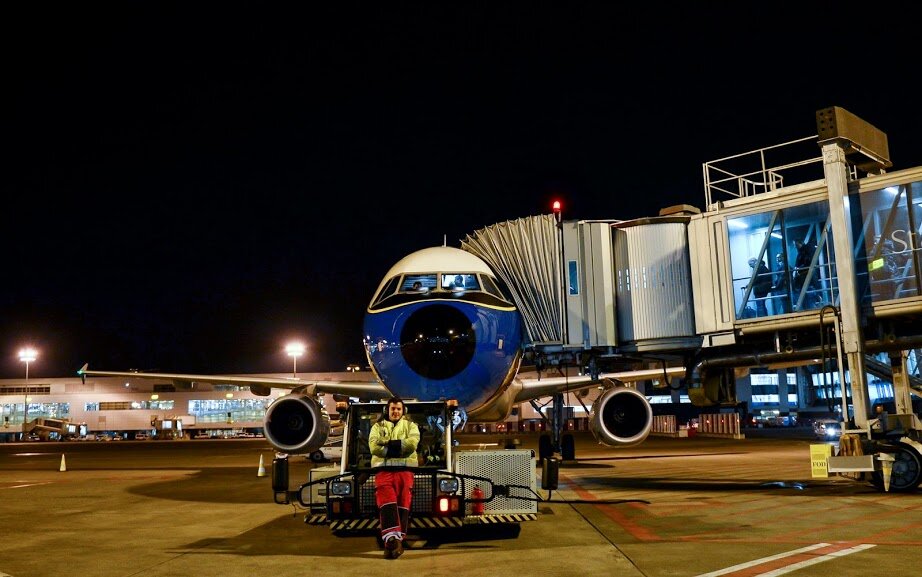
As the Phoenix dies and rises from its ashes, so have the beautiful and vibrant city of Beirut and its airport: Beirut-Rafic Hariri International Airport.
Beirut, the Lebanese capital, one of the oldest cities in the world, lies on the eastern shore of the Mediterranean Sea, at the crossroad between the Occident and the Levant. Despite being destroyed and rebuilt 7 times over its lifetime of 5000 years, it remains a vibrant, multicultural, flamboyant city that has defied earthquakes, invasions and wars, and rebuilt itself again from its ashes.
I was President and CEO of Airports Council International – North America (ACI-NA) for eight years, from July 1, 2005 through June 30, 2013. During those eight years, I had more conversations than I could possibly count with people who wondered why airport privatization has not taken off in the United States. Many of these conversations were with people heavily involved in running or financing privatized airports around the world. Many were held with U.S. colleagues who thought privatization would provide benefits. In the world’s largest economy, and primary bastion of capitalism, airport privatization has remained the rarest of infrastructure animals. Why?

No business, including airports, operates in a vacuum. The environment in which each of us works is constantly changing. Competitive tension, evolving customer requirements and the ever-present stockholder expectations of growth and increased profit. This all comes together to put pressure on airport managers to do more with their limited resources, including people.
Then why would we limit ourselves to only a portion of humanity when it comes to building our teams?
What are generally considered the benefits of having a diverse workforce were outlined in my earlier article but actually getting a diverse workforce was only touched on in the diversity post. So let’s take a deeper look at recruitment and selection.

Millions of people are fleeing conflict in Syria, Iraq, Afghanistan and Ukraine, as well as persecution in areas of Southeast Asia and Sub-Saharan Africa. Why are people fleeing? Where are they going? How are host countries responding?Fleeing war-torn lands in search of safer, better lives, people have been leaving their native countries. A total of 9.6 million migrants fled the Middle East as of the end of 2015, up from 4.2 million in 2005 – a nearly 130% increase. This increase in emigration waves has been fuelled by arising conflicts mainly in Iraq, Syria, Yemen and Afghanistan creating the highest level of displacement since World War II. Worldwide migration pressures are expected to increase with the rise of war zones and demographic and economic differences between developed and developing countries. These waves of humanity will shape the future character of host countries.

There are fundamental differences in how climate change impacts airports. Airports are operationally different from, say, power stations or seaports. For example power stations are intrinsically enclosed facilities; their encasement against external elements is relatively straightforward. With seaports, appropriate walls or physical barriers can be erected to shelter against potential increases in rough seas or in sea-levels.
For airports, it is not possible to simply build physical barriers to close them off against adverse atmospheric effects that may afflict flight operations.
Quality. Integrity. Teamwork.
New Airport Insider is an independent airport blog trusted by senior airport managers worldwide. Led by a team of experienced aviation professionals, New Airport Insider offers insights into the most relevant airport issues, emerging technologies, trends, and companies, and the opportunities they create for airports.
Air travel is a commodity. For most travelers, price is king, and fare competition is fierce. Over the years, the vicious circle of price wars has left a trail of airline casualties. Surprisingly, many other industries manage to thrive in a commoditized environment, and airlines can learn from them.
Commoditization occurs when the market perceives products to be substitutable. When products are substitutable, customers will naturally purchase the cheapest, and businesses will fight to lower their costs. It is common for economic textbooks to use the evolution of the American airline market after deregulation to introduce commoditization.